Subscribe!

Email:
Zip:

06/04/2009 - 4:42pm

President Obama Speaks in Cairo Regarding Nuclear Weapons

President Obama this morning gave a historic speech in Cairo where he outlined his vision for coexistence between the United States and the Muslim world, emphasizing their common history and future.

The President addressed the issue of nuclear weapons and Iran's nuclear ambitions directly. He said, "No single nation should pick and choose which nation holds nuclear weapons. And that's why I strongly reaffirmed America's commitment to seek a world in which no nations hold nuclear weapons. And any nation — including Iran — should have the right to access peaceful nuclear power if it complies with its responsibilities under the nuclear Non-Proliferation Treaty."

Obama stated the willingness of the United States to discuss the issue bilaterally with Iran, and reaffirmed the country’s support for nuclear power for a peaceful end. He noted that it may be difficult for the two countries to overcome years of mistrust but it was necessary in order to move forward and strengthen relations between the two countries.

05/13/2009 - 4:45pm

What Role for Diplomacy in Stabilization and Reconstruction?

Yesterday, May 12, Army Lieutenant General Stanley McChrystal was recommended by Defense Secretary Robert Gates to replace the former top U.S. and NATO commander. McChrystal joins four ambassadors who are second-in-command for the region.

This fusion of both military and nonmilitary personnel begs the question: What role does diplomacy play in stabilization and restoration of states? How can military and nonmilitary actors work together to strengthen the process? This was the subject of an event Wednesday, March 13, at the Woodrow Wilson International Center for Scholars. Speakers included former Ambassador to NATO under President Clinton Robert Hunter, and Thomas Boyatt, former Ambassador to Colombia and Burkina Faso.

It was explained by the Ambassadors that the way in which we think about international politics, military and nonmilitary work, and the interactions between them needs to be restructured. All of these areas are highly interdependent upon one another and it is necessary for each to work effectively with the others. However, there are many factors preventing this cooperation from occurring.

Nonmilitary personnel need training. Those in the military spend one third of their careers in school, an amount of time much greater than the schooling of the Foreign Service Officer. The government's military budget outweighs that of the Department of State, nonmilitary aid and international institutions at a ratio of 17 to 1. The U.S. spends more money on military affairs than all other countries, combined. People aren’t able to do their jobs, Hunter said, Ambassadors need “walking around money” and the authority to use it without having to seek prior approval up the chain of command.

Lastly, the Ambassadors explained, the government needs to learn how to incorporate nongovernmental organizations into diplomacy. State Department Appropriations FY2010 is speculated to announce a new Foreign Service career track, concentrating on Service members who serve at international organizations and multilateral institutions. This may well help bridge the gap between government and NGOs, amending one of the flaws pointed out by Ambassadors Boyatt and Hunter.

05/07/2009 - 4:24pm

Reviving U.S.-Russian Nuclear Arms Control

On Wednesday, May 6, the Brookings Institute held a discussion on U.S.-Russia relations and the challenges posed by nuclear arms control. Panelists included Brookings President Strobe Talbot, Steven Pifer, Visiting Fellow and author of “Beyond START: Negotiating the Next Step in U.S. and Russian Strategic Nuclear Arms Reductions,” and Brookings vice president and director of Foreign Policy Carlos Pascual.

There are currently 9 countries with nuclear weapons now and 56 conducting research into nuclear enrichment programs. Of those 56 countries, 12 have the capacity to begin such programs. Additionally, 30 have indicated they will develop new programs; 14 of these nations are located in the Middle East and North Africa. If Iran acquires a weapon, it is a matter of time before other nations will do the same.

Following their meeting in London, President Obama and President Medvedev began negotiations on a new strategic arms reduction scheme. The panelists at Brookings explained that nuclear proliferation is one of the greatest threats to the global community today, and that both the United States and Russia must agree to reduce and control their stockpiles if other nations are expected to follow suit.

The success of the Non-Proliferation Treaty [NPT] is vital to the realization of weapons reduction and is dependent upon three conditions. First, the nuclear weapons states should disarm; the United States and Russia should agree to reduce their strategic nuclear arsenals, while holding discussions on how to address non-deployed strategic warheads and tactical weapons. Second, non-nuclear weapons states should be given access to civil nuclear technology after agreeing to forgo it for military use. Lastly, all nations should commit to prevent nuclear proliferation.

Such a regime would be beneficial for both parties by reducing nuclear stockpiles, providing an incentive for nonproliferation to those nations seeking nuclear capabilities, and protecting such materials from acquisition by malevolent groups.  Finally, such a scheme would make the world a safer place and eliminate one of the deadliest threats to the human race.

04/27/2009 - 11:32am

The IMF and Aid to Africa

Currently, 65% of the world is in recession, an amount greater than at any time since 1960. The International Monetary Fund [IMF] recently stated that the downturn is likely to be “unusually severe and long-lasting.” The recession is likely to starve developing countries of their resources and the Fund predicts that these fledgling economies may face shortages of investments for many years to come.

The IMF also stated that effective and internationally coordinated actions would be necessary for any improvement in the global economic situation. A report explained: “Shrinking economic activity has put further pressure on banks’ balance sheets as asset values continue to downgrade, threatening their capital adequacy and further discouraging fresh lending. Thus, credit growth is slowing, and even turning negative, adding even more downward pressure on economic activity.”

The effects of the economic crisis are already felt on a global scale but it is especially harsh on charities and organizations catering to sub-Saharan Africa, due to the fact that a large number depend on donations made by their members. If the individual donors have no money to give to philanthropic causes, these nonprofits will be unable to fund their programs. The IMF has made warnings regarding foreign aid decreases in the region and already many of these organizations are going out of business.

The Fund’s Managing Director Dominique Strauss-Kahn said, “According to the World Bank, over 50 million people in low income countries, many of whom live in Africa, could be thrown back into absolute poverty – with obvious consequences for other social ills, like sickness and infant mortality. The economic and political challenges facing Africa are clearly enormous.”

In an effort to help curb these challenges, the United States has pledged to double development aid to the area by next year. As a result of a pledge that was made by the members of the G-8 in 2005, the nation will double funds previously allocated to sub-Saharan Africa with the goal of $8.7 billion by 2010.

At the G-20 meeting in London this month, Geithner emphasized President Obama’s intentions to work with Congress to boost U.S. aid. He explained that the administration plans to “provide nearly half a billion dollars in immediate assistance to vulnerable populations and double support for agricultural development to more than one billion dollars in 2010 so that we can give people the tools they need to life themselves out of poverty.”

Without the help of those who are able to provide them with assistance, the fragile economic status of nations in sub-Saharan Africa will continue to worsen. It is necessary for governments and organizations to collectively prevent a domino-effect of countries falling as casualties to the global economic crisis.

04/13/2009 - 11:42am

The Push to Ratify CEDAW

All over the world, millions of women are denied equal access to property, legal action, civic life and public participation on a daily basis. Seventy percent of the poorest people in the world are female. Of a total of 771 million illiterate adults, two-thirds are women. One out of three women will experience physical abuse or violence and one out of five will be the victim of rape or attempted rape in her lifetime.

The Convention on the Elimination of All Forms of Discrimination Against Women [CEDAW], seeks to help change these unacceptable statistics. The international agreement forms standards for basic women's rights and is widely supported around the world. Out of the United Nations members, 185 have already ratified, making up over ninety percent. President Carter signed CEDAW in 1980; however, it was never ratified in Congress. Currently, only seven other nations have yet to ratify.

CEDAW signatories commit to the improvement of the status of women and the end of discrimination against women worldwide. It would also establish legal functions to protect the rights of women and create a system for accountability to the United Nations. Committees would monitor reports made every four years regarding the steps each nation has made to comply with the treaty.

As a leading industrialized nation, the United States' failure to ratify appears to other countries as indifference. The nation fails to acknowledge that these rights are universal and that they deserve advancement and enforcement through international law. Ratifying the Convention would give the U.S. credibility in the international community regarding women's rights and it would answer the calls of the over 200 leading advocacy organizations. The nation would lend its global influence to furthering the cause of women's rights, putting an end to discrimination against women around the globe.

With the recent passing of a Shia law in Afghanistan , which will require women to ask the permission of a male relative before leaving the house and will allow her husband to have intercourse with her even if she refuses, women's rights have been forced into the spotlight. While the United States has already expressed its objection to the law, such an occurrence makes the ratification of CEDAW in the U.S. and the enforcement of the treaty on a global level that much more urgent.

Speaker of the House Nancy Pelosi, a vocal advocate of the treaty, said, "CEDAW is essential to advancing the status of women around the world. It establishes rights for women in realms never before subject to global standards, such as political participation, legal protections, and access to jobs, education and health care." President Obama plans to push for ratification of the treaty, which will restore the United States' standing as a leader in the international community.

04/06/2009 - 1:04pm

North Korean Nuclear Tests

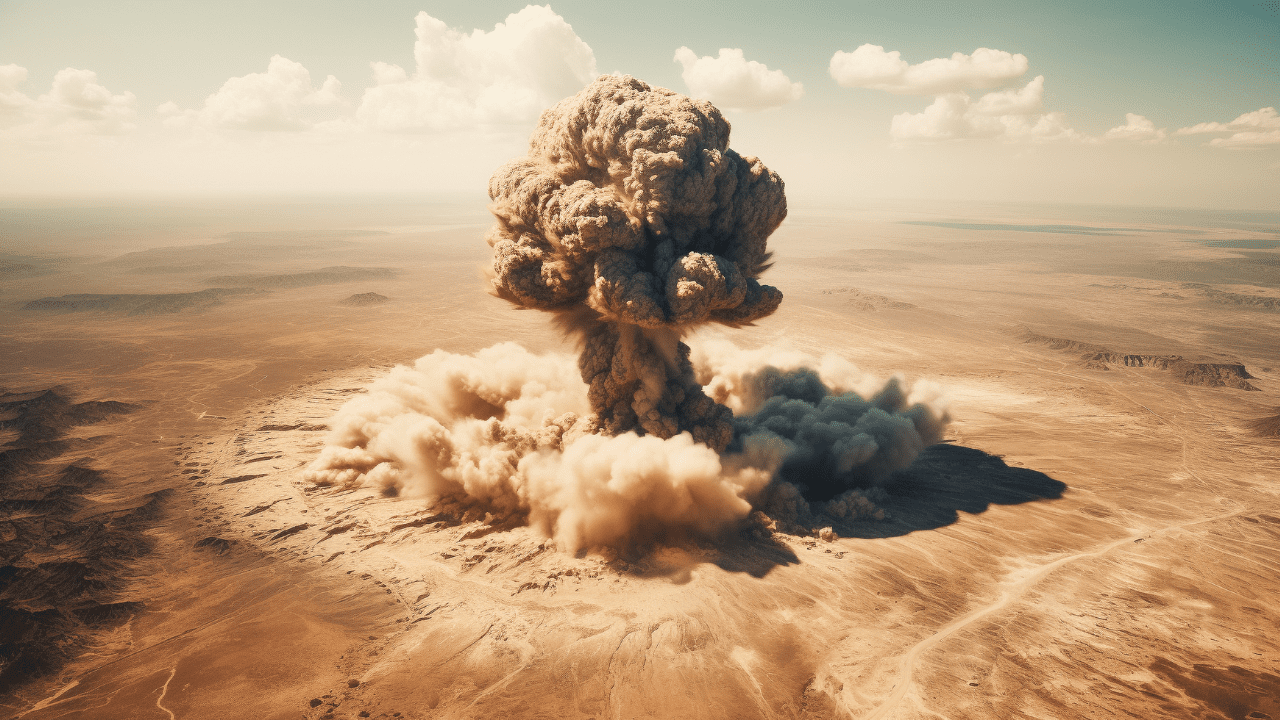
North Korea tested a long range nuclear rocket over the weekend, following talks last Wednesday between President Obama and Russian President Dmitry Medvedev about reducing their countries' nuclear stockpiles. This act violates United Nations Security Council Resolution 1718, which prohibits North Korea from manipulating ballistic missile technologies. It was adopted unanimously in October 2006 as a result of claims that the country had performed successful nuclear tests in the beginning of the month.

Members of the United Nations Security Council convened Sunday to discuss the event but were unable to give an official response due to Chinese and Russian resistance. Department of State Press Secretary Robert Wood said Secretary of State Hilary Clinton has since been in contact with the council's permanent members to negotiate a "strong, coordinated and effective response."

Following the launch, President Obama called for the immediate ratification of the Comprehensive Test Ban Treaty , which has been previously blocked by the Senate. He also announced yesterday that in addition to working towards a reduction in warheads in the US and Russia, he may provide the Nuclear Proliferation Treaty (NPT) with the authority it has lacked. Strengthening the treaty will ensure that in the event of a violation, offending actors face swift, strong international sanctions. In conclusion, the President stated: "I'm not naive. This goal will not be reached quickly ' perhaps not in my lifetime. It will take patience and persistence. But now we . . . must ignore the voices who tell us that the world cannot change. We have to insist, 'Yes, we can'."

418 7th Street SE, Washington, DC 20003-2796
Phone: (202) 546-3950 Fax: (202) 546-3749
Privacy Policy