Subscribe!

Email:
Zip:

02/12/2010 - 12:51pm

Check Out "The ICC's Most Wanted"

ICC Emblem

The presentation highlights the activities of the ICC, specifically focusing upon the individuals who are presently indicted by the court.  The purpose of the interactive presentation is to demonstrate that the ICC is currently active in pursuing war criminals.  The Rome Statute, which is the legislation that created the ICC, defines the types of crimes that individuals can be charged for: genocide, crimes against humanity, war crimes, and the crime of aggression.  Many opponents have claimed that the ICC will target the actions of U.S. soldiers.  With this interactive module, Citizens for Global Solutions hopes to deflate that notion by demonstrating that the court is taking aggressive measures against individuals who have allegedly committed atrocious crimes throughout the world.

“The ICC’s Most Wanted” provides summary information for the individuals who are currently being indicted for the terrible crimes they have committed.  The module also shines spotlights on four regions that have experienced significant turmoil: Sudan, Uganda, Congo, and the Central African Republic.  In each country’s section, it describes the details and circumstances for each of the individuals currently being pursued by the court.  The Sudan, for example, describes the crimes committed by Omar al-Bashir, Ahmed Haroun, Bahr Idriss Abu Garda, and Ali Kushayb.

The interactive tool is a great first introduction to the activities of the International Criminal Court.  It is important to emphasize, however, that the nature of the crimes is quite disturbing.  You can explore the module and all it has to offer HERE.

Tags:

02/01/2010 - 5:20pm

Nuclear Non-Proliferation, 18 Years Later

The Nuclear Non-Proliferation Treaty (NPT) was opened for signature in 1968 and entered into force in 1970.  According to the United Nations, the organization responsible for the legislation, “the Treaty represents the only binding commitment in a multilateral treaty to the goal of disarmament by the nuclear-weapon States.”  Five of the states party to the treaty are considered nuclear weapon states: the United States, Russia, the United Kingdom, France, and China.  

President Obama

However, the United States has been criticized on several occasions for violating the provisions of the treaty when negotiating arms sales with India, a recognized nuclear state that has refused to sign the NPT.  In 2008, President Obama stated that he wished to “strengthen the Nuclear Non-Proliferation Treaty so that nations that don’t comply will automatically face strong international sanctions.”  Additional nuclear states that are noticeably absent from the list of signatures are Israel and Pakistan.  The treaty, set to be assessed every five years, will be reviewed in May of this year.

With regard specifically to negotiations between Russia and the United States regarding US-Russia nuclear relations, one successful treaty is the Strategic Offensive Reductions Treaty (SORT).  The goals of the legislation are to limit the number of warheads each state has within its nuclear arsenal.  The treaty, which expires in 2012, requires semi-annual negotiations of the provisions of the document.

With the release of his FY2011 budget today, President Obama demonstrated where his priorities stand.  Under the Department of Energy, the President included $2.7 billion to “secure nuclear material, develop and field technology to detect and deter nuclear testing and smuggling, and support international nonproliferation treaties, regulatory controls, and safeguards.”  This funding could demonstrate President Obama’s commitment to non-proliferation, as it could be utilized toward the passage of the CTBT and START treaties.   Additional priorities of the Department of Energy are to “dismantle excess nuclear weapons,” which is definitely in line with the overarching goal of nuclear non-proliferation.  As analysis of the budget continues, it will be imperative to focus upon the DOE’s funding of nuclear non-proliferation efforts.  


01/28/2010 - 2:49pm

Priorities, Priorities!

During President Obama’s first State of the Union address on January 27, 2010, he focused on the upcoming economic challenges to be faced by the American people, as well as health care legislation and educational reform at all levels.  However, he also spoke about several issues that are key to the work of Citizens for Global Solutions.

Climate Change: Although President Obama focused primarily upon the need to improve the domestic job market and American economy, he stated that“…to create more of these clean energy jobs, we need more production, more efficiency, more incentives.  And yes, it means passing a comprehensive energy and climate bill with incentives that will finally make clean energy the profitable kind of energy in America.”  He reaffirmed his dedication to climate change legislation, asserting that “the nation that leads the clean energy economy will be the nation that leads the global economy.  And America must be that nation.”

Prohibition of torture: He spoke of the threat of terrorism as well as the prohibition of torture in the same paragraph.  Through this gesture, he established a possible link between the need to balance the pursuit of terrorists and the remembrance of every individual’s inherent human rights.  

Nuclear non-proliferation: President Obama stated “the greatest danger to the American people – the threat of nuclear weapons.” Emphasizing the importance of nuclear non-proliferation, he stated that one of his responsibilities as leader of the nation was reducing nuclear stockpiles.  Additionally, he described engaging internationally in nuclear weapons discussions at the upcoming Nuclear Security Summit to be held in April.

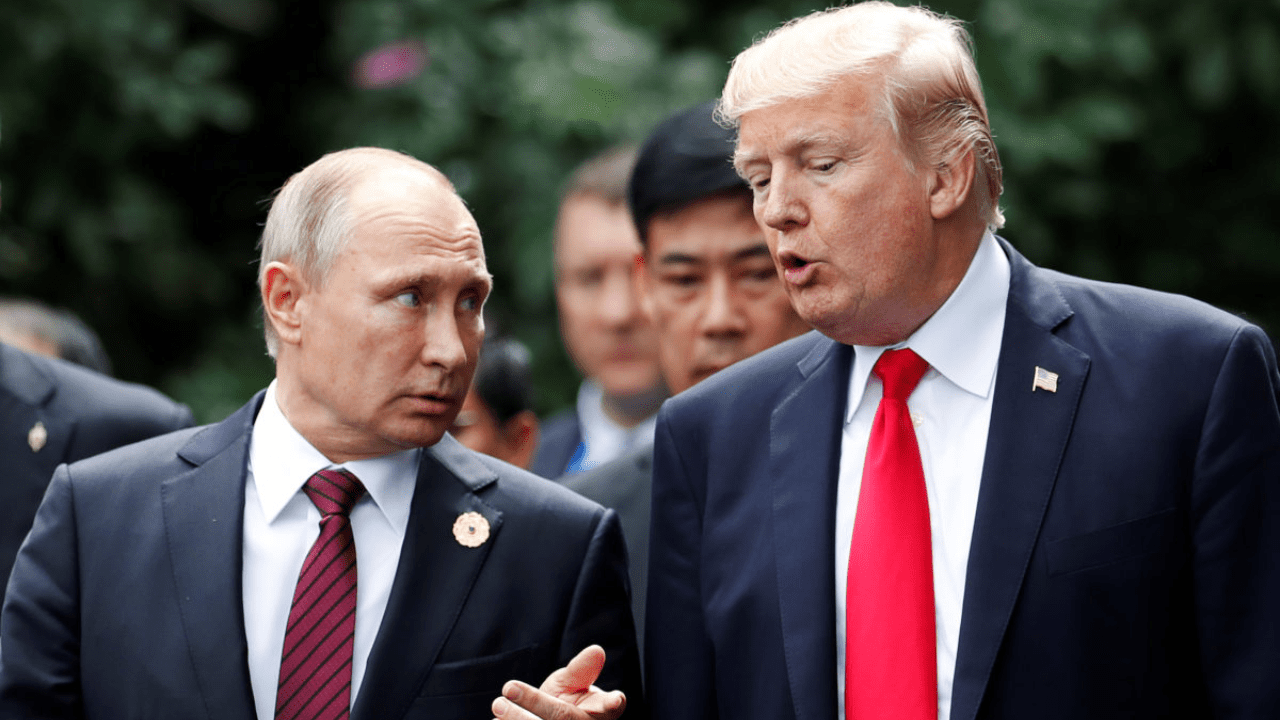
Photo Courtesy of "The Globe and Mail"

Engagement with international organizations: Obama emphasized the importance of active US engagement in international institutions through summits such as the G-20, which focuses primarily upon global economic issues.  Stressing the historical significance of engagement, President Obama said, “As we have for over 60 years, America takes…actions because our destiny is connected to those beyond our shores.  But we also do it because it is right.”

As Obama exclaimed, “Let’s seize this moment – to start anew, to carry the dream forward…”  Citizens for Global Solutions has incredible work ahead in order to accomplish our goals.  With the assistance of our members, and a president who has expressed support for many of our issue areas, CGS has hope for this next year too.

01/25/2010 - 3:23pm

UN Peacekeeping Presence Grows in Haiti

As of January 25, 2010, The United Nations continued its work to provide emergency relief services to the people of Haiti with a meeting of senior United Nations officials today.  The purpose of the meeting was to coordinate the various sources of aid that are currently being channeled toward the nation.  Immediate goals for the crisis-stricken state include stabilization and security efforts, which are being led primarily through the efforts of UN Peacekeepers.

UN Photo/Sophia Paris

Based upon the United Nations Security Council resolution of January 19, the United Nations Stabilization Mission in Haiti (MINUSTAH) expanded its forces to 8,940 troops and a police force of up to 3,711 individuals.  After visiting Port-au-Prince, UN Secretary-General Ban Ki-Mmoon requested an additional augmentation of troops for the region after surveying the devastation.  In describing the mission, Alain LeRoy, the UN Secretary-General for peacekeeping, stated that “their main task is to assure security and, of course, to help the Haitian people remove the rubble in all the places it can.”  The latest figures indicate that there have been 81 total fatalities, of which 21 are confirmed UN Peacekeeping fatalities. The earthquake claimed the head of MINUSTAH, Hedi Annabi, as well as individuals representing Tunisia, Nigeria, Canada, Mexico, Italy, USA, Germany, Niger, Democratic Republic of Congo, France, Guatemala, India, Philippines, United Kingdom, and Brazil.  According to the UN News Centre, “the earthquake has caused the single greatest loss of life in the UN’s history.”  With at least 50 people unaccounted for, the UN must combine efforts to assist the Haitians as well as identify the dispatched personnel.  Although early recovery efforts are currently underway, it is apparent that much greater investments into reconstruction and redevelopment of infrastructure will be necessary.

The first UN peacekeeping operation in Haiti began in September of 1993.  After initial issues of cooperation with the Haitian government, the UN had several successful missions.  In 2000, the presidential elections were contested and, as a result, armed conflict broke out in 2004.  With Security Council Resolution 1529 (2004), the United Nations Stabilization Mission in Haiti (MINUSTAH) was established.  The devastating effects of the January 12 earthquake have further engaged UN efforts in Caribbean country.  It would appear almost certain that the United Nations will have a continued presence in Haiti for years to come as the nation works to rebuild all that was destroyed.  

If you would like to donate to the relief efforts in Haiti, please click here.

01/20/2010 - 4:34pm

Launch of American Engagement Caucus

The new American Engagement Caucus will officially launch tomorrow, Thursday January 21, 2010 at 10:00 am in the Rayburn House Office Building Room 2200.  The Caucus was formed to foster the development of strategies in which to engage other nations.   In an increasingly globalized world, the United States cannot expect to unilaterally tackle the many challenges present today, such as terrorism and climate change.  The Caucus will analyze potential multilateral approaches to global issues, working to engage both formal governmental institutions and international organizations.  One of the primary objectives of the body is to review the role the United States currently plays in regional and international institutions such as the European Union and the United Nations.  

The two Congressmen spearheading the American Engagement Caucus are Congressman Russ Carnahan (D-MO) and Congressman Anh “Joseph” Cao (R-LA).  They have stressed the importance of the formation of such a governmental body, stating, “Our security, our economic future, and safeguarding the world’s environment all depend on engagement.”  The American Engagement Caucus is the first to explicitly evaluate ways in which to improve and strengthen U.S. partnerships amongst nations.  

Citizens for Global Solutions, the Better World Campaign, and the United Nations Association of the United States of America support the efforts of Congressmen Carnahan and Cao.  CGS encourages members and interested individuals alike to attend the Launch party to be held tomorrow.  To RSVP, please e-mail Dana Proctor of the United Nations Foundation at dproctor@unfoundation.org with your name and organizational affiliation.

418 7th Street SE, Washington, DC 20003-2796
Phone: (202) 546-3950 Fax: (202) 546-3749
Privacy Policy