|
|||||||||||
Blog TagsBlog Archive
Subscribe!Search This Site: |
03/15/2010 - 5:29pmObama and Medvedev Discuss Arms TreatyPosted by Veronica Glick
02/01/2010 - 5:20pmNuclear Non-Proliferation, 18 Years LaterPosted by Hannah Karns
The Nuclear Non-Proliferation Treaty (NPT) was opened for signature in 1968 and entered into force in 1970. According to the United Nations, the organization responsible for the legislation, “the Treaty represents the only binding commitment in a multilateral treaty to the goal of disarmament by the nuclear-weapon States.” Five of the states party to the treaty are considered nuclear weapon states: the United States, Russia, the United Kingdom, France, and China.
However, the United States has been criticized on several occasions for violating the provisions of the treaty when negotiating arms sales with India, a recognized nuclear state that has refused to sign the NPT. In 2008, President Obama stated that he wished to “strengthen the Nuclear Non-Proliferation Treaty so that nations that don’t comply will automatically face strong international sanctions.” Additional nuclear states that are noticeably absent from the list of signatures are Israel and Pakistan. The treaty, set to be assessed every five years, will be reviewed in May of this year. With regard specifically to negotiations between Russia and the United States regarding US-Russia nuclear relations, one successful treaty is the Strategic Offensive Reductions Treaty (SORT). The goals of the legislation are to limit the number of warheads each state has within its nuclear arsenal. The treaty, which expires in 2012, requires semi-annual negotiations of the provisions of the document. With the release of his FY2011 budget today, President Obama demonstrated where his priorities stand. Under the Department of Energy, the President included $2.7 billion to “secure nuclear material, develop and field technology to detect and deter nuclear testing and smuggling, and support international nonproliferation treaties, regulatory controls, and safeguards.” This funding could demonstrate President Obama’s commitment to non-proliferation, as it could be utilized toward the passage of the CTBT and START treaties. Additional priorities of the Department of Energy are to “dismantle excess nuclear weapons,” which is definitely in line with the overarching goal of nuclear non-proliferation. As analysis of the budget continues, it will be imperative to focus upon the DOE’s funding of nuclear non-proliferation efforts. 01/28/2010 - 2:49pmPriorities, Priorities!Posted by Hannah Karns
During President Obama’s first State of the Union address on January 27, 2010, he focused on the upcoming economic challenges to be faced by the American people, as well as health care legislation and educational reform at all levels. However, he also spoke about several issues that are key to the work of Citizens for Global Solutions. Climate Change: Although President Obama focused primarily upon the need to improve the domestic job market and American economy, he stated that“…to create more of these clean energy jobs, we need more production, more efficiency, more incentives. And yes, it means passing a comprehensive energy and climate bill with incentives that will finally make clean energy the profitable kind of energy in America.” He reaffirmed his dedication to climate change legislation, asserting that “the nation that leads the clean energy economy will be the nation that leads the global economy. And America must be that nation.” Prohibition of torture: He spoke of the threat of terrorism as well as the prohibition of torture in the same paragraph. Through this gesture, he established a possible link between the need to balance the pursuit of terrorists and the remembrance of every individual’s inherent human rights. Nuclear non-proliferation: President Obama stated “the greatest danger to the American people – the threat of nuclear weapons.” Emphasizing the importance of nuclear non-proliferation, he stated that one of his responsibilities as leader of the nation was reducing nuclear stockpiles. Additionally, he described engaging internationally in nuclear weapons discussions at the upcoming Nuclear Security Summit to be held in April.
Engagement with international organizations: Obama emphasized the importance of active US engagement in international institutions through summits such as the G-20, which focuses primarily upon global economic issues. Stressing the historical significance of engagement, President Obama said, “As we have for over 60 years, America takes…actions because our destiny is connected to those beyond our shores. But we also do it because it is right.” As Obama exclaimed, “Let’s seize this moment – to start anew, to carry the dream forward…” Citizens for Global Solutions has incredible work ahead in order to accomplish our goals. With the assistance of our members, and a president who has expressed support for many of our issue areas, CGS has hope for this next year too. 12/04/2009 - 11:42amSTART Ends with US and Russia Close to a New Nuclear Arms Reduction TreatyPosted by Laura Meditz
The US and Russia pledge to have a new nuclear missile treaty worked out very soon. Negotiators from both countries say they are very close to completing a successor to the Cold War-era agreement that has cut both countries stockpiles of nuclear weapons, START. The current START treaty, created in 1991, expires at midnight tonight, amidst ongoing negotiations for a new treaty. Kremlin sources have been optimistic that some agreement can be made while President Obama is in Europe next week to receive the Nobel Peace Prize. Washington has expressed hopes of having an interim agreement in place until a new treaty can come into effect if necessary.
Learn more about Citizens for Global Solutions' policy suggestions on nuclear weapons here. ACT NOW in support of Nuclear Non-proliferation Treaties! 10/30/2009 - 5:13pmCan Nukes Ever be Safe?Posted by Komal Hiranandani
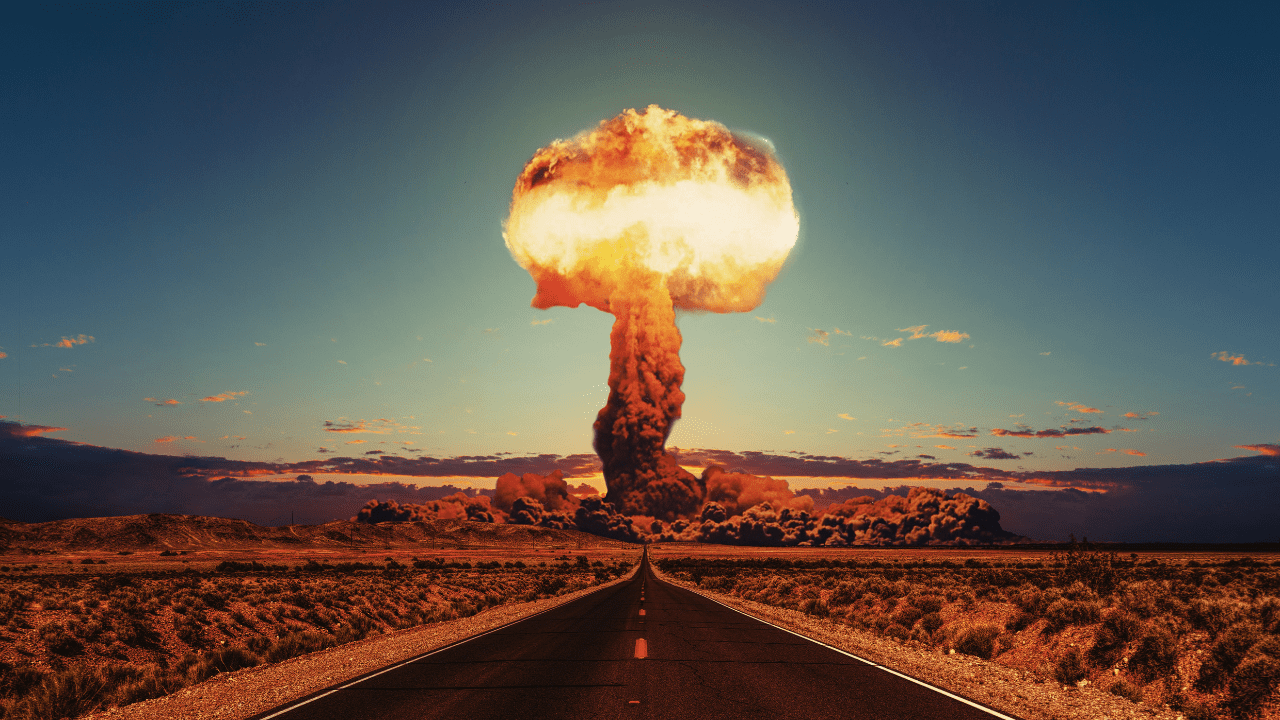
A much talked about threat of “loose nukes” comes from the former Soviet Union. Before its collapse, it had over 27,000 nuclear weapons. Though former Soviet Republics turned in their nuclear warheads to Russia in the 1990s, few countries still have stockpiles of weapons-grade uranium and plutonium. Even within Russia, authorities have admitted that they have had to break up hundreds of nuclear-material smuggling operations. Wherever nuclear materials exist, governments have to continually fight off hostile actors. Pakistan has also provoked much concern, especially considering the powerful role of its military in the government. The acquisition of nuclear technology in Pakistan itself demonstrates how nuclear secrets cannot remain safe. It was disgraced scientist, A.Q. Khan, who introduced the country’s nuclear program. He has been accused of stealing this technology through spies in other countries. Khan also confessed to contributing to the transfer of nuclear technology to Libya, Iran and North Korea. Pakistan’s own stock of nuclear weapons is also under serious threat, particularly now as it is waging a violent war against the Taliban. Unfortunately, the threat to Pakistan’s stockpile could come not only from extremists within the country, but also from the government’s lack of control over its weaponry. A book called “Deception: Pakistan, the United States and the Secret Trade of Nuclear Arms” claimed that, during the Kargil war against India, Pakistan’s nuclear weapons had been deployed to launch sites without the President’s knowledge or approval. Closer to home, the U.S. has demonstrated that even a powerful government cannot secure a full-proof grip over its weapons. For instance, in 2006 the U.S. military accidentally shipped nuclear material to Taiwan. In 2008, it was revealed that the U.S. Air Force did not know the locations of several nuclear missile components and other nuclear parts. One official said that more than 1,000 components were missing. We have all heard enough stories and seen enough pictures from Chernobyl, Hiroshima and Nagasaki to imagine the kind of damage that nuclear material in the wrong hands can cause. Can this ever be worth the risk? 10/09/2009 - 4:26pmObama on the Nobel Prize "A Call To Action"Posted by Don Kraus
I was pleased by President Obama's 'aw-shucks' comments on winning the Nobel Peace Prize, saying: "After I received the news, Malia walked in and said, "Daddy, you won the Nobel Peace Prize, and it is Bo's birthday!" And then Sasha added, "Plus, we have a three-day weekend coming up." So it's good to have kids to keep things in perspective." But what really impressed me was how he framed his acceptance of it: I will accept this award as a call to action -- a call for all nations to confront the common challenges of the 21st century. These challenges can't be met by any one leader or any one nation.... We cannot tolerate a world in which nuclear weapons spread to more nations and in which the terror of a nuclear holocaust endangers more people....We cannot accept the growing threat posed by climate change, which could forever damage the world that we pass on to our children -- sowing conflict and famine; destroying coastlines and emptying cities. This is a call to action that needs to be answered. Not only by nations, but by global citizens from across the world. I believe President Obama understands the need for action. It's up to us to stand up together make this vision a reality. 10/06/2009 - 3:24pmNorth Korea – Open to Discussion about Nuclear Weapons?Posted by Samantha Taylor
North Korea’s possession of nuclear weapons has been the cause of much tension throughout the international community for several years. After the country’s withdrawal from the Nuclear Non-Proliferation Treaty in 2003, it has repeatedly issued reports of successful nuclear tests. North Korea, now referred to as a “fully fledged nuclear power,” has had world leaders at the edge of their seats. But now, according to a New York Times article, the country is expressing interest in rejoining the six-nation talk about its nuclear weapon programs. Kim Jong-il, the North Korean leader, expressed this sentiment today to the visiting Chinese prime minister. Yet, there is In addition to the conditional aspect of North Korea’s interest, there are concerns about North Korea’s motivation to rejoin the discussion. Specifically, world powers fear that North Korea plans to use the negotiations as a method of receiving aid and diplomatic concessions. Despite the hesitation involved with North Korea’s renewed interest, it appears to be a step in the right direction towards nuclear discussion and eventual disarmament. 09/21/2009 - 11:36amPresident Obama to chair Security Council nuclear disarmament meeting at the United NationsPosted by Laura Meditz
President Barack Obama will chair a Security Council meeting on September 24, 2009 regarding two of the United Nations' most sensitive issues: nuclear nonproliferation and nuclear disarmament. This meeting will emphasize the threats posed by proliferation of nuclear weapons and steps to reduce these dangers. The Council is expe This will be a test of leadership for President Obama on the world stage. It will be an important meeting to build momentum behind a very critical issue to not only the United States, but the rest of the world. Thursday's meeting will underscore the importance of strengthening the Nuclear Nonproliferation Treaty at next year's review conference. Since the Council has been split in the past on how to handle the nuclear activities of Iran and North Korea, it will be useful to keep the focus broad in order to build a unified message throughout the Security Council members. You can watch the nuclear disarmament meeting live at the United Nations Webcast. 09/14/2009 - 9:57amU.S. Circulates Non-Proliferation Treaty for the U.N. Security CouncilPosted by Komal Hiranandani
Among other measures, the draft resolution calls for signatories of the Non-Proliferation Treaty (NPT) to negotiate nuclear arms reduction, deplores aggressive proliferation that threatens international security (implying North Korea and Iran), encourages other countries to join the NPT, welcomes steps taken to create nuclear-weapon-free zones as those championed by some Arab states (which would require Israel to dispose of all the nuclear weapons they may possess- Israel neither confirms nor denies having a nuclear stockpile), urges countries to join the Comprehensive Test Ban Treaty (CTBT), and supports the International Atomic Energy Agency (IAEA)- the nuclear watchdog in Vienna. The democratic platform for the 2008 presidential election comprised a strong agenda for nuclear arms control including U.S. ratification of the CTBT, strengthening the IAEA, and adhering to the NPT. It is encouraging that the Obama adminstration is acting on these promises. The onus is now on U.N. Security Council members to adopt this resolution, thereby taking concrete steps to make our world peaceful and more secure. Read more here 08/24/2009 - 5:37pmA change in approach but not tone from TehranPosted by Kevin Carroll
The call for closer engagement between the West and Iran from Hassan Qashqvi, Iranian foreign ministry spokesman, echoes our sentiments. That being said, a nuclear Iran pursuing weapons development does not bode well for the security of the region or the world. As Susan Rice stated in her recent speech at NYU, this problem is one of the many critical challenges that "cannot be tackled by any one country alone." The Obama Administration must continue to constructively engage Iran while encouraging others with influence to put pressure on Tehran.
Tags:
418 7th Street SE, Washington, DC 20003-2796
Phone: (202) 546-3950 Fax: (202) 546-3749 Privacy Policy |
||||||||||
|
|
|||||||||||