Subscribe!

Email:
Zip:

08/03/2010 - 1:46pm

New START vs. the Tea Party: What's the Greatest Threat?

Written by Don Kraus for the Huffington Post


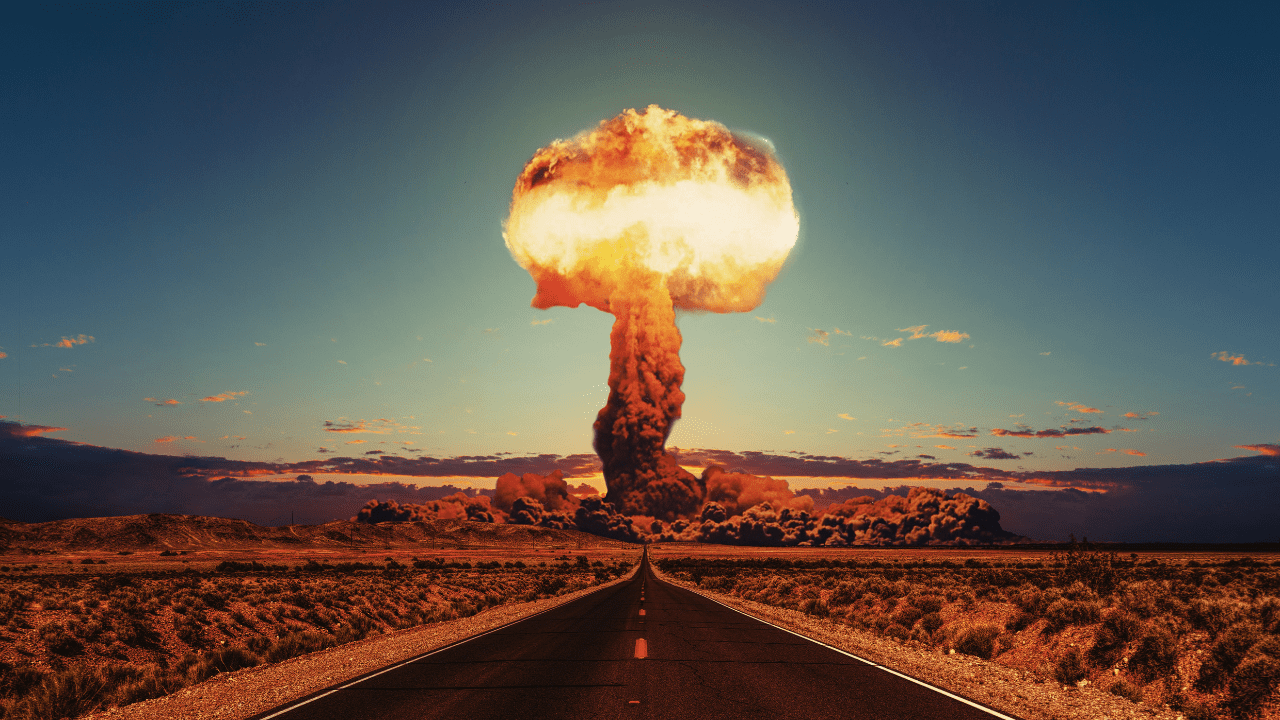
What's more dangerous: the thousands of nukes that will still target U.S. and Russian cities if the New START treaty is not ratified OR the opportunistic, Tea Party pandering politicians who would derail this commonsense agreement?

If you answered "the nukes", you're wrong.

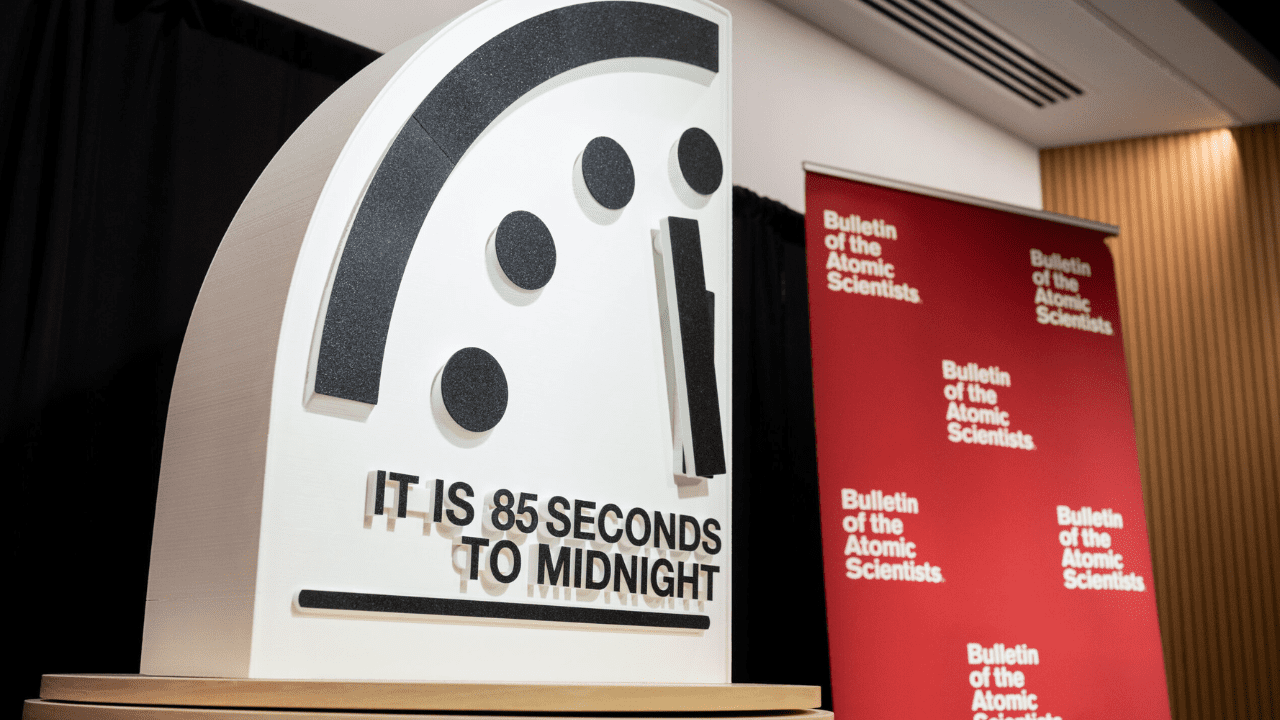
New START will reduce the global inventory of strategic nuclear warheads on hair-trigger alert to levels not seen since I was born in 1954. But these weapons are not nearly as dangerous as the obstructive "Cold War" messaging that treaty opponents are deploying to upset New START's ratification.

Seven former commanders of the Strategic Air Command and the U.S. Strategic Command who recently endorsed the pact said, "There is little concern today about the probability of a Russian nuclear attack." The terrorist bomb that takes out Washington or New York will most likely come in a shipping container rather than an ICBM.

The utility of New START is that it makes the world more predictable. It replaces the START treaty originally negotiated by President Reagan that expired last December. Like its predecessor, New START not only reduces the number of warheads, it assures that both nations "trust but verify" each other's compliance with the terms of the treaty. Ratification will send a strong message that the U.S. is seriously pursuing its nuclear disarmament obligations, giving it more credibility to demand that nations like Iran and North Korea not build nuclear weapons.

New START is on track for approval. A huge list of Republican and Democratic policymakers, including five former defense secretaries and six former secretaries of state are pushing for ratification. But a gang of right wing politicos will try to use the August congressional recess to blame, frame and fundraise New START into oblivion.

Operatives including Republican presidential hopeful Mitt Romney, former U.N. Ambassador John Bolton, the Heritage Foundation, and even the Tea Party's "Liberty Central" are launching misinformation campaigns to kill the treaty. This is part of an isolationist strategy that should be considered a greater long-term threat to our nation's security then the warheads that New START will eliminate. Their core belief is best expressed by the Eagle Forum's Phyllis Schlafly who, in her rant against New START said, "We live in a dangerous world in which bad guys respect strength and weapons, and disdain weakness and disarmament."

But in fact, ratification of any treaty and participation in international organizations sends a message of cooperation, partnership, and a desire for clear rules and a level playing field. In a recent interview Secretary of Defense Robert Gates, a hard-nosed realist, said "it's amazing how much trust matters in relationships, whether it's with governments or with individuals around the world." It's only human nature to prefer to do business with those we like and respect. The United States is stronger when perceived as a friend.

Unfortunately, a growing chorus of ultra-nationalist voices is spreading disinformation and fear when it comes to all things multilateral. Tea Party candidates, like former NFL star Clint Didier, know what their audience wants to hear, "We need to get out of the U.N. and to get the U.N. out of the United States" because, "they are out to take our guns and repeal American sovereignty." This sentiment is shared by Nevada's Tea Party candidate Sharron Angle who wants the U.S. to sever all ties with the United Nations.

Voices of fear are fanning xenophobic passions that threaten our nation's values, aspirations, and our ability to thrive in a connected world. Like the proverbial genie, globalization cannot be put back in the bottle. America cannot close its borders, nor can it afford to ignore the international community. Childlike temper tantrums will not make the world go away.

Ratification of New START is essential to the U.S. for a variety of reasons. Not only will it provide greater security by reducing the threat of nuclear annihilation, but it is also a valuable opportunity for internationalist adults -- Democratic and Republican, liberal and conservative - to retake control of our foreign policy. It is time to advance the cooperative international institutions, laws, and norms that enhance U.S. security and promote democratic values.

Yes, the nuclear weapons that New START addresses present a clear risk to our nation. But the vocal cadres who will do anything to block the ratification of all international agreements present an even graver threat: At stake is our ability to enshrine our beliefs and values in the growing web of agreements that are the legal bedrock of this world.


Don Kraus is the CEO of Citizens for Global Solutions and co chairs the CEDAW Task Force of The Leadership Conference on Civil and Human Rights.

01/21/2010 - 3:11pm

The Era of Unilateralism is Over


Representatives Carnahan, Cao, Delahunt. With Lindsay Coats

“The era of unilateralism is over,” exclaimed Representative Bill Delahunt (D-MA) during the conference to launch the bi-partisan American Engagement Caucus at 10:00am on Thursday, January 21.  

The conference was led by the caucus’ founding members, Representative Russ Carnahan (D-MO) and Representative Anh “Joseph” Cao (R-LA), and was complimented by speeches from former UN Ambassador and current President of the Connect US Fund Nancy Soderberg, InterAction’s Lindsay Coats, and Representative Bill Delahunt.  Representative Carnahan opened the conference by pointing out the challenges of living in a global society and stating that an isolated United States would leave the country desolated with military, economic, and humanitarian problems. 

Carnahan reiterated the importance of understanding our global partners and enemies while working multilaterally for America’s best interest.  He made sure to explain that one of the objectives behind the engagement is to create a “smart power” strategy to encompass what Defense Secretary Robert Gates described as, “…military success is not sufficient to win: economic development, institution-building and the rule of law. . . along with security, are essential ingredients for success.”    Smart power as a blend of military strength and creative diplomacy can relieve our security issues as well as reinforce our international image. Subsequently, Representative Carnahan used a quote from President Truman to exemplify an overarching goal of the Caucus by stating,


“It is understanding that gives us an ability to have peace. When we understand the other fellow's viewpoint, and he understands ours, then we can sit down and work out our differences.”


Furthermore, Representative Cao discussed the purpose of this Caucus is to alleviate the threats of terrorism, nuclear proliferation, genocide, and poverty while expanding trade in international markets through multilateral work.   He explained that the Caucus will work through a bi-partisan effort to deliberate the benefits and challenges of multilateral cooperation.  Representative Cao also mentioned the example of the multilateral effort to bring humanitarian aid to Haiti, and how this will serve as a model for multilateral collaboration in the future.


Finally, Representative Bill Delahunt provided the conference with more insight on the importance of the Caucus by stating that we have “no option” but to work multilaterally with our global neighbors.  He voiced the concern that unilateralism in today’s world can only hurt the United States’ security, economy, and humanitarian efforts.  Also, he explained that through multilateral work an understanding can develop within our global partners to realize our power is “predicated from a moral authority.”   Each dignitary spoke with integrity and realized the importance of America’s multilateral cooperation in this global society.  With peace and prosperity as its main goal, this Caucus will be an extraordinary compliment to Citizens for Global Solutions and other organizations.  Citizens for Global Solutions CEO Don Kraus said this of the new Caucus,


“Citizens for Global Solutions is thrilled that Representatives Carnahan and Cao are establishing this venue for members of Congress to discuss our world’s most pressing concerns.  From climate change to genocide we increasingly face challenges that no nation, no matter how powerful can solve alone.  Our members across the nation are excited that their representatives will now have an opportunity to build bipartisan consensus on how the United States can best address these issues in a cooperative fashion.”


Don also hinted to hill staff that membership in the American Engagement Caucus will be rewarded with extra credit on the upcoming Congressional report card.  Along with CGS, other organizations are excited about the possibilities that this new Caucus provides. 

Peter Yeo, Executive Director of the Better World Campaign, said:


“At such a critical time in U.S. foreign policy, the American Engagement Caucus is a great way for Congress to work on issues where cooperation is better than going it alone.  As we see the world working together in the relief efforts in Haiti, it is apparent how important U.S. collaboration can be in strengthening American national security and foreign policy interests. We look forward to working with Congressman Carnahan, Congressman Cao, and all of the other members of the Caucus in the future.”

Through the continued efforts of organizations like these and the new American Engagement Caucus, the United States can further work on behalf of all humanity to advance the issues that affect the world.  Representatives Carnahan and Cao explained through an Op-ed piece in the The Hill that

“Historically, America has been the most respected nation in the world because of our commitment to working with all countries on behalf of freedom, peace, and other common objectives.” 

Now, with this Caucus there is greater hope that the United States can further its historic efforts for the betterment of mankind.

09/25/2009 - 2:32pm

President Obama and the United Nations

Multilateralism is again the focal point for American foreign policy, in a way that has not been seen in a number of decades. The new U.S. engagement is manifesting itself in both word and deed. President Obama's whirl-wind tour of multilateralism is a refreshing sight. President Obama started his tour with a speech to the U.N.'s Secretary-General Ban Ki-Moon's Climate Change Summit. In his remarks, as he repeated in his address to the General Assembly, he stated that the U.S. is ready to address global problems on the global stage. He recognized that, while the U.S. and other Western states have contributed the most to climate change, the least developed States will bear the greatest burdens. He pledged that the U.S. will do more to combat climate change and help mitigate the effects, but reaffirmed that all nations must make legitimate commitments to reverse greenhouse gas emissions. His words were strong and forceful but more importantly his deeds are echoing more forcefully. Domestically the U.S. is making progress to reduce our emissions.

Next, the President spoke to the General Assembly. His speech covered many topics, but emphasized the U.S.'s commitment to engagement and finding comprehensive solutions to global obstacles. He focused on disarmament, peace building, environmental protection, and economic development. However, the U.S. has not only spoken wisely about multilateral policies, the U.S. has taken important steps to ensure cooperation. The U.S. has taken bilateral and unilateral steps to this end. The administration signaled its willingness to sign new treaties with Russia and has unilaterally withdrawn plans to station missile interceptor systems in the Czech Republic and Poland. The following day he chaired the Security Council as he forwarded a new resolution calling on all member states to increase their nuclear non-proliferation regimes, and reinvigorated the IAEA's role in nuclear arms control.

The multilateralism tour has yet to cease. He is now meeting with the G20 to address climate change initiatives, economic recovery and development. These issues must not be fractionalized/ compartmentalized. The U.S. and political leaders in every state must spend the necessary political capital to ensure that economic growth is also environmentally sustainable.

Click HERE to see our full page on all of Obama's speeches at the 64th General Assembly of the U.N.

418 7th Street SE, Washington, DC 20003-2796
Phone: (202) 546-3950 Fax: (202) 546-3749
Privacy Policy